Copy trading vs manual
The last decade or so has seen exponential growth in the amount of retail participation within the Forex market. As a result of this explosion, new traders and intermediate level traders are at a crossroads. The choice to handle all aspects of a trading decision as opposed to having someone else execute your trades has valid reasons on both sides, but there are very real consequences involved for the trader. Those consequences include the trader's current educational level, the inherent amount of risk a trader is willing to assume per trade, and the long term growth potential of their capital.
Copy trading has become very popular, as you can follow successful traders in real time. On the other hand, manual trading is time-consuming and demands a lot of practice and creativity, as you develop your own trading strategy, which is never guaranteed to be profitable. Both copy trading and manual trading attract a huge number of serious traders, each with their own tactics, and a high potential for substantial losses, should the trader not fully understand the trading mechanism.
A very important aspect which is hardly ever covered is that each approach serves a different purpose for different traders at different stages. Whether experienced or a complete novice, how much time is available to dedicate to trading, risk tolerance, objectives, and whether the goal is immediate returns or long-term skill development — all of these are meaningful considerations.
What is copy trading and how does it work
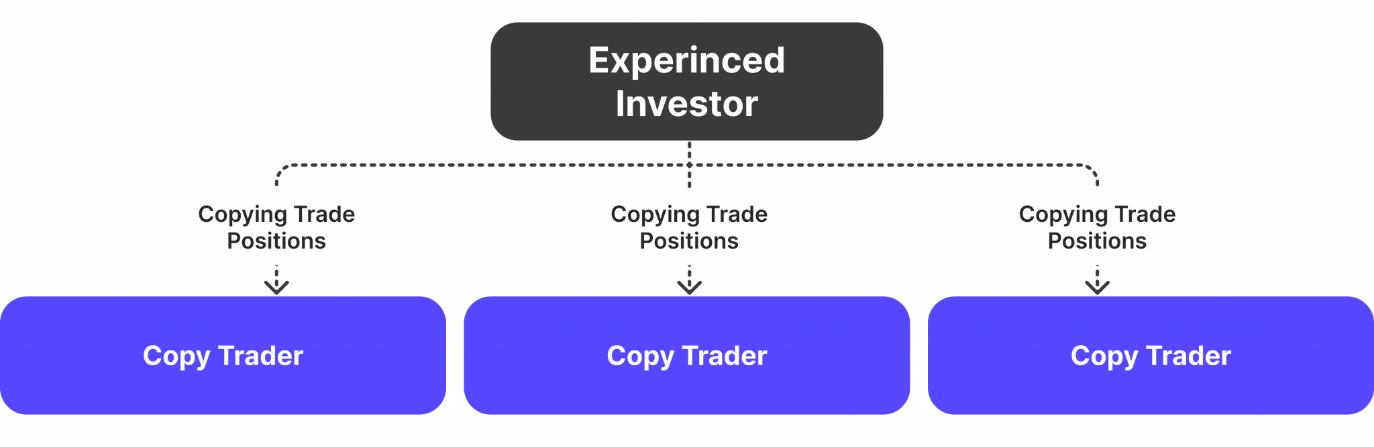
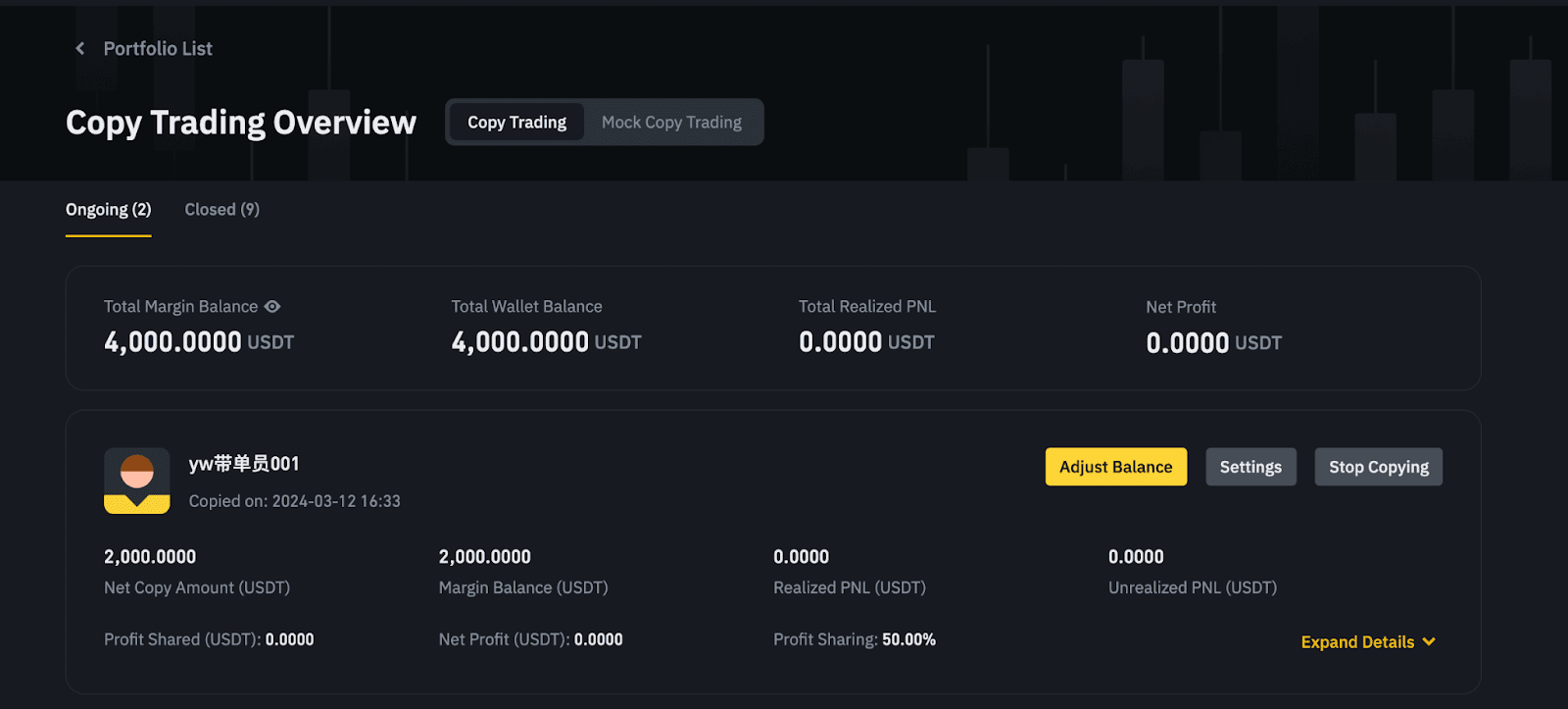
Copy trading allows followers to replicate the trades of a signal provider so that all trades executed on the signal provider's account are mirrored on the follower's account. Entries, exits, trade direction, and position size are all automatically replicated. The follower makes no independent trading decisions. Parameters such as maximum capital allocation and risk limits can be set before connecting, but all subsequent execution is handled automatically.
Copy trading systems are usually integrated directly into social trading platforms, though some Forex brokers have implemented this functionality within their own trading environments. Signal providers are typically required to maintain a verified profile with a publicly available trade history, allowing prospective followers to review drawdown figures, win/loss ratios, and average trade duration before connecting.
Past performance, whether audited or not, carries no guarantee of future results. A signal provider with a solid 14-month track record can experience a severe drawdown in month fifteen. When that happens, followers are left carrying real capital losses with little understanding of the underlying position rationale or when to exit.
What is manual trading and what it demands
Manual trading means analysing the market, identifying entry and exit conditions, sizing positions, and managing open trades without any algorithm or signal provider involved. Every decision rests with the trader.
There is a technical floor that must be cleared before live trading begins — price chart literacy, order types, risk-to-reward ratios, and position sizing rules. Beyond that sits the psychological dimension, which tends to be underestimated. Managing drawdowns without abandoning a strategy, resisting the urge to average down on a losing position, and maintaining discipline through weeks of underperformance are the areas where most manual traders encounter their real difficulties.
Execution typically takes place through MetaTrader 4 or MetaTrader 5, which provide charting tools, indicator libraries, and full order management functionality. Some traders use TradingView for analysis before routing orders through a separate broker platform.
The learning curve is steep and slow. But what accumulates over time — genuine understanding of market mechanics and price behaviour — is something copy trading cannot replicate.
Performance and return expectations
Return expectations, in both approaches, are one of the most consistently mismanaged variables in retail forex. Neither copy trading nor manual trading reliably produces double-digit monthly returns, and performance records — regardless of how they are presented — warrant careful scrutiny before any capital is committed.
Copy trading returns depend heavily on provider selection. A provider reporting strong short-term figures while using high leverage and a martingale-style recovery system may be masking a significant drawdown risk that does not yet appear in the published statistics.
Manual trading carries its own set of problems. The majority of retail forex accounts lose money over time, driven by overtrading, poor risk management, and undercapitalisation. Developing a consistently profitable manual strategy typically takes years, not months.
A trader targeting a modest 3% monthly return with disciplined risk management will, through annual compounding, produce meaningful long-term growth. Chasing 20% monthly returns — through either approach — introduces a level of risk that makes account survival, not profit, the primary concern.
Risk profiles: where each approach exposes you
A common misconception about copy trading risk is that the follower's exposure is reduced simply because trades are being executed by someone else. It is not. The capital at risk belongs to the follower, and losses are real regardless of who initiated the position.
The specific risks in copy trading include provider dependency and execution lag. A signal provider may increase position sizes at unfavourable moments, alter their strategy without notice, or stop trading entirely — leaving the follower with open exposure and no clear exit rationale. Execution lag, even measured in fractions of a second, compounds across many trades and can meaningfully affect fill prices relative to what the signal provider received.
Manual trading shifts the risk profile from provider-dependent to behavioural. Emotional decision-making, overtrading under pressure, and abandoning a strategy mid-drawdown account for a large proportion of retail losses. These are risks entirely within the trader's control — which is simultaneously the challenge and the point.
Position sizing discipline and stop-loss application are non-negotiable in both approaches. Neither method removes the need to determine, clearly and in advance, how much of the account should be at risk on any single trade.
Costs, platforms, and practical access
Copy trading and manual trading do not carry the same cost structure, and those differences accumulate over time.
Most copy trading platforms generate revenue through spread markups on the signal provider's account and, in some cases, a percentage of the follower's net gains. Followers also pay standard broker spreads on every replicated trade. For high-frequency strategies such as scalping, these layered transaction costs can add up quickly — and for some scalping strategies, the added spread markup alone can make the approach unviable when executed through a copy platform.
Manual traders pay spreads and potentially commissions on each trade placed, but have direct control over trading frequency. A trader operating on a longer time frame may execute only a handful of trades per week, keeping cumulative costs considerably lower than a short-term trader placing dozens of trades daily.
Platform access differs between the two approaches. Copy trading requires a social trading platform or a broker with integrated copy functionality. Manual traders work through MetaTrader 4, MetaTrader 5, TradingView, or proprietary broker interfaces. Some platforms charge additionally for premium indicators or data feeds, which should be factored into the total monthly cost of trading.
Minimum deposit requirements also vary and are worth considering before committing capital. Some copy trading platforms set higher entry thresholds to ensure that position sizing can be replicated proportionally without distortion — a follower with insufficient capital may find that copied trades are rounded in ways that alter the intended risk exposure, particularly where minimum lot sizes prevent precise scaling relative to account balance.
Who each approach is actually for
Copy trading suits traders with limited time to monitor markets actively, those in the early stages of developing their market knowledge, and experienced traders looking to diversify across strategies outside their own methodology.
It is not a passive income guarantee. Provider selection, allocation sizing, and ongoing performance monitoring are all active responsibilities. Losses from poorly managed copy trading can match or exceed those from a badly executed manual strategy.
Manual trading is appropriate for those prepared to invest significant time in developing genuine trading competency. It suits traders who want full control over their methodology, are willing to study price behaviour and risk management rigorously, and understand that consistent performance is a long-term outcome.
The two approaches are not mutually exclusive. Many traders use copy trading as an income stream while developing manual skills on a smaller account — treating them as parallel activities rather than competing ones.
Conclusion
The comparison between copy trading and manual trading is not a question of which is objectively better. It is a question of fit — between the method and the trader's current skill level, available time, risk tolerance, and goals.
Copy trading lowers the execution barrier without reducing financial risk. Manual trading raises the skill requirement but builds durable market competency that persists beyond any single provider's performance record.
What separates traders who develop sustainably from those who do not is rarely the method chosen. It is whether the mechanics were understood, risk was managed with discipline, and expectations were realistic from the outset. The choice between copy and manual trading is the first decision. How it is managed from that point determines the outcome.