MT4 vs MT5 – which is better?
MetaTrader 4 launched in 2005 and quickly became the default platform for retail forex traders worldwide. Nearly two decades later, its successor — MetaTrader 5 — exists alongside it rather than replacing it. That alone says something worth examining.
The question traders keep asking is simple on the surface: which platform is better? But the honest answer is that "better" depends entirely on what the trader needs. MT4 was built for forex. MT5 was built for more. Those are genuinely different design philosophies, and choosing between them without understanding that distinction tends to lead to frustration.
Both platforms are developed by MetaQuotes Software and remain the most widely deployed retail trading platforms globally. Brokers offer them, educators teach them, and algorithmic traders build on them. Yet the two platforms serve meaningfully different use cases, and the gap between them is wider than most introductory comparisons acknowledge.
A brief history of MetaTrader
MetaQuotes released MetaTrader 4 in 2005, and brokers adopted it at a pace that surprised even its developers. By the late 2000s, MT4 had become the near-universal standard for retail forex execution. Its appeal was straightforward: a clean interface, reliable order execution, built-in charting, and a scripting language that let traders automate strategies without needing a software engineering background.
MetaTrader 5 followed in 2010. MetaQuotes positioned it as a multi-asset platform — designed not just for forex but for equities, futures, and commodities. The programming language was overhauled, the order system was restructured, and additional analytical features were added. But MT5 did not displace MT4. Many brokers kept offering both, and a significant portion of retail traders simply stayed where they were.
Part of that inertia is technical. MT4 experts built custom indicators and automated systems in MQL4, and those tools do not transfer directly to MQL5. Migration has a cost. That is still true today.
Key technical differences
The structural differences between MT4 and MT5 run deeper than most traders initially realise. MT4 operates on a single-threaded execution model, which was adequate for the forex volumes of the mid-2000s. MT5 uses a multi-threaded architecture — meaning it can process multiple operations simultaneously, which matters when running complex strategies or handling large data sets across several instruments.
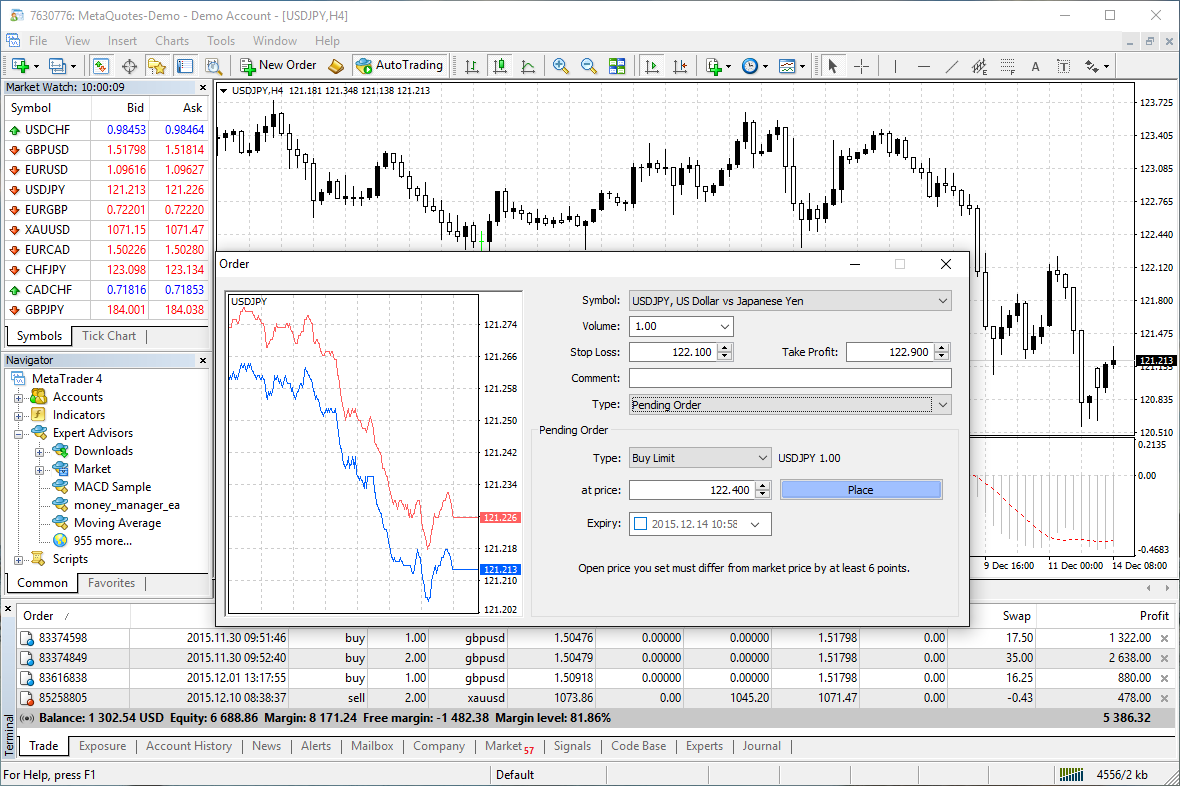
Order types offer another meaningful point of divergence. MT4 supports four pending order types: Buy Limit, Sell Limit, Buy Stop, and Sell Stop. MT5 adds two more — Buy Stop Limit and Sell Stop Limit — giving traders finer control over conditional entries. Not every trader will use them, but for those who trade around specific price structures, the additional precision is useful rather than cosmetic.
The backtesting engine is also fundamentally different. MT4's strategy tester runs on single-currency, single-timeframe data. MT5 supports multi-currency backtesting and tick data simulation, which produces results that more closely reflect actual market conditions. For algorithmic traders, that distinction is not minor.
Trading instruments and market access
MT4 was designed around the forex market, and that focus shaped everything from its order management system to the way it handles price feeds. For a trader dealing exclusively in currency pairs, that narrow design is not a limitation — it is a feature. The platform does what it was built for without unnecessary complexity.
MT5 takes a broader approach. It supports equities, futures, options, and commodities alongside forex. Brokers offering CFD products across multiple asset classes tend to favour MT5 for this reason. A trader who wants to move between forex and indices within a single platform has a clear reason to lean toward MT5.
There is a practical caveat here. The instruments available on either platform are still determined by the broker, not by MetaQuotes. MT5's multi-asset capability only matters if the broker has actually activated those markets. Traders sometimes assume the platform itself unlocks access, when in reality, broker licensing and regulatory permissions are what determine which products are tradeable. Checking the broker's instrument list before selecting a platform is the step that often gets skipped.
Analytical tools and timeframes
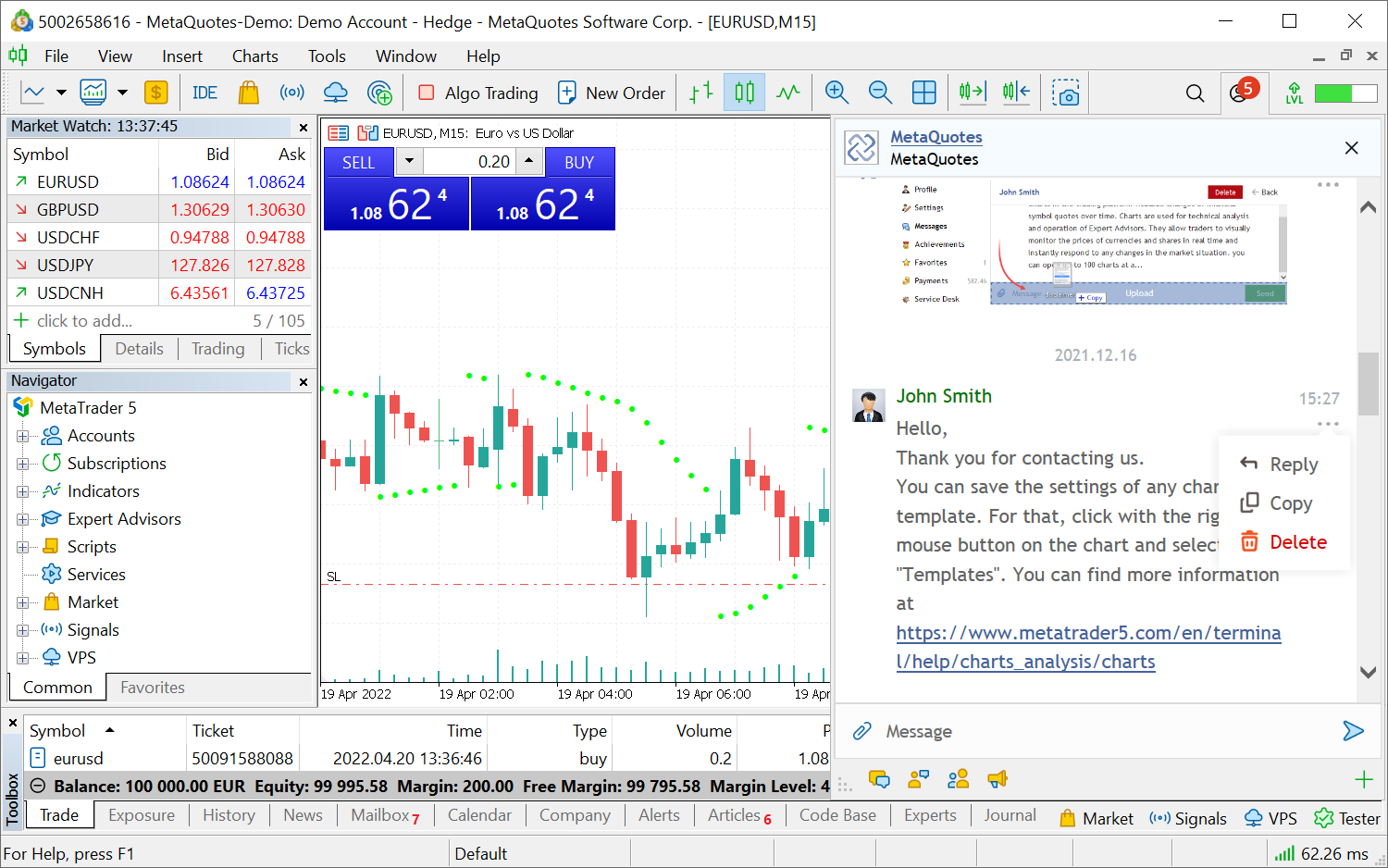
MT4 offers nine timeframes, ranging from one minute to one month. That range covers the needs of most retail traders, particularly those focused on forex. MT5 expands this to twenty-one timeframes, including intermediate options such as four-hour, two-hour, and twelve-hour charts that simply do not exist natively in MT4.
The indicator library has also grown. MT5 includes thirty-eight built-in technical indicators compared to MT4's thirty. Both platforms support custom indicators built in their respective MQL languages, so the built-in count is less critical for experienced users who are comfortable importing third-party tools. For newer traders relying primarily on native functionality, the expanded MT5 library offers more flexibility out of the box.
Economic calendars are integrated natively in MT5 — a practical addition that MT4 does not include by default. Traders monitoring central bank decisions or data releases no longer need a separate browser tab running alongside the platform. It sounds like a small convenience, and perhaps it is, but it reflects a design philosophy that treats fundamental analysis as part of the trading environment rather than an afterthought.
Algorithmic trading and programming language
Automated trading is where the gap between the two platforms becomes most consequential. MT4 uses MQL4, a scripting language that was deliberately simplified to make algorithmic trading accessible to non-programmers. The tradeoff is that MQL4 is limited in scope — it handles straightforward Expert Advisors well but struggles with complex, multi-instrument logic.
MQL5, the language underpinning MT5, is built on object-oriented programming principles and is structurally closer to C++. It allows for more sophisticated strategy architecture, faster execution, and the ability to build reusable code libraries. For developers building institutional-grade systems, MQL5 is a materially better environment.
But this is where a common trap exists. Traders sometimes migrate to MT5 expecting their existing MT4 Expert Advisors to carry over. They do not. MQL4 and MQL5 are not compatible, and rewriting even a moderately complex EA from scratch takes time and technical skill. The MT4 ecosystem of custom indicators and automated strategies is also larger and more established, having had a fifteen-year head start. For traders who have invested heavily in MT4 tools, that library has real value worth accounting for.
Community, broker support, and availability
MT4's longevity has produced something that MT5 is still building: a mature, well-documented ecosystem. The MetaTrader Market and independent forums contain thousands of indicators, scripts, and Expert Advisors developed over nearly two decades. When something goes wrong with an MT4 setup, the answer is usually findable because someone else has encountered the same problem before.
MT5 adoption has grown, but its community is smaller and its third-party resource library — while expanding — has not yet matched MT4's depth. That gap narrows with time, but it is real today.
Broker availability is shifting. MetaQuotes announced in 2022 that it would no longer onboard new MT4 brokers, which signals a gradual transition toward MT5 as the default going forward. Many established brokers continue to offer both platforms to avoid disrupting their existing client base, but the trajectory is clear. Traders starting from scratch now have fewer reasons to commit exclusively to MT4, particularly if their broker of choice is already orienting its infrastructure around MT5.
Which platform suits which trader
The practical answer is more granular than most comparisons admit. A retail trader who focuses on major and minor forex pairs, uses a handful of technical indicators, and has no interest in automated strategies will find MT4 entirely sufficient. The platform is stable, widely supported, and familiar to a large proportion of the broker community. Switching to MT5 for its own sake adds friction without obvious benefit.
The case for MT5 strengthens with complexity. Traders who operate across multiple asset classes, run automated strategies that require multi-currency backtesting, or want native access to more timeframes and indicators are working in territory where MT5's architecture delivers tangible advantages. The same applies to developers. Anyone building or maintaining algorithmic systems over a multi-year horizon is better served by MQL5's structural capabilities and MetaQuotes' stated direction.
There is also a forward-looking consideration. If MT4 broker availability continues to contract — and the evidence suggests it will — then traders who delay the transition simply postpone it.
Conclusion
Neither platform is objectively superior. MT4 remains a capable, streamlined tool for forex-focused retail traders, and its ecosystem carries genuine practical value. MT5 offers broader market access, a more powerful development environment, and a feature set that scales with trading complexity.
The question was never really which platform is better in the abstract. It is which platform fits the trader asking. A discretionary forex trader running manual setups on daily charts has different requirements than a developer backtesting a multi-instrument algorithm across tick data. Both exist on the same spectrum, but they are not the same problem.
What does seem clear is that the industry is moving toward MT5. Not urgently, not uniformly, but directionally. Traders who understand both platforms — their respective strengths, limitations, and the workflows they support — are better positioned to make that transition on their own terms rather than on someone else's timeline.