Statistical arbitrage in currency markets
Statistical arbitrage in currency markets refers to a rule-based trading approach that seeks to exploit short-term price inefficiencies using historical data and probability. The method relies on statistical relationships between currency pairs rather than economic forecasts or discretionary analysis. The foreign exchange market demonstrates these relationships because its microstructure depends on how liquidity patterns and order flow patterns affect each other.
The trading volume and news-based market movements create situations where two currency pairs which show strong correlation will experience brief periods of market difference. The main goal of statistical models involves identifying market deviations which exceed their usual limits and determining the probability of price returns to their historical relationship. Trades are then structured using predefined position sizes, leverage, and margin requirements, with risk controlled through strict rules.
A strategy detects a small price difference of several pips which exists between two currency pairs that have related values. The combination of exact lot sizing with strict adherence to scheduled price adjustments requires all price adjustments to be treated as critical events.
Theoretical foundations of statistical arbitrage
The statistical arbitrage theory bases its fundamental principles on probability theory and mean reversion principles and market efficiency concepts. The market operates within defined statistical boundaries because liquidity flows and hedging activities and short-term market imbalances between supply and demand occur. The statistical arbitrage model depends on market price reversion to past averages but it maintains prices within specific boundaries before they return to their historical values.
The price movement of a currency pair exists within specific pips-based boundaries which have developed throughout its historical data. Statistical models of historical data help predict market reversion through the analysis of market spreads which exceed their normal operating boundaries. The process of determining trade size needs information about lots and pip value and margin requirements to execute effective risk management strategies. A trading strategy would establish a specific number of pips which traders must risk per transaction while modifying their position size to maintain a stable risk exposure that does not depend on market volatility.
Statistical properties of currency markets
The statistical patterns in currency markets enable analysts to perform quantitative market analysis. Exchange rates move in continuous increments measured in pips, while trade exposure is defined through standardized lot sizes. These features allow price behavior to be measured, compared, and tested over long data samples. Statistical arbitrage depends on detecting regular market patterns which involve volatility and correlation and price differences instead of trying to predict market direction.
The volatility indicator shows the average number of pips which currency pairs tend to move during specific time intervals. The pip value for each lot remains constant when market volatility increases but the possible trading gains and losses become larger. The position sizing process needs to be modified because it should maintain both margin utilization and risk exposure at their current levels. A strategy which aims to achieve a five-pip statistical advantage. The trading lot size needs to decrease when market volatility reaches double its original level because this adjustment maintains the five-pip value at established monetary boundaries.
The main characteristic which defines correlation exists as its essential quality. Some currency pairs tend to move together due to shared economic drivers. The market provides investors with brief windows to invest because market correlations deviate from their typical patterns while investors make their trades successfully and maintain their borrowing limits.
Common statistical arbitrage strategies in FX
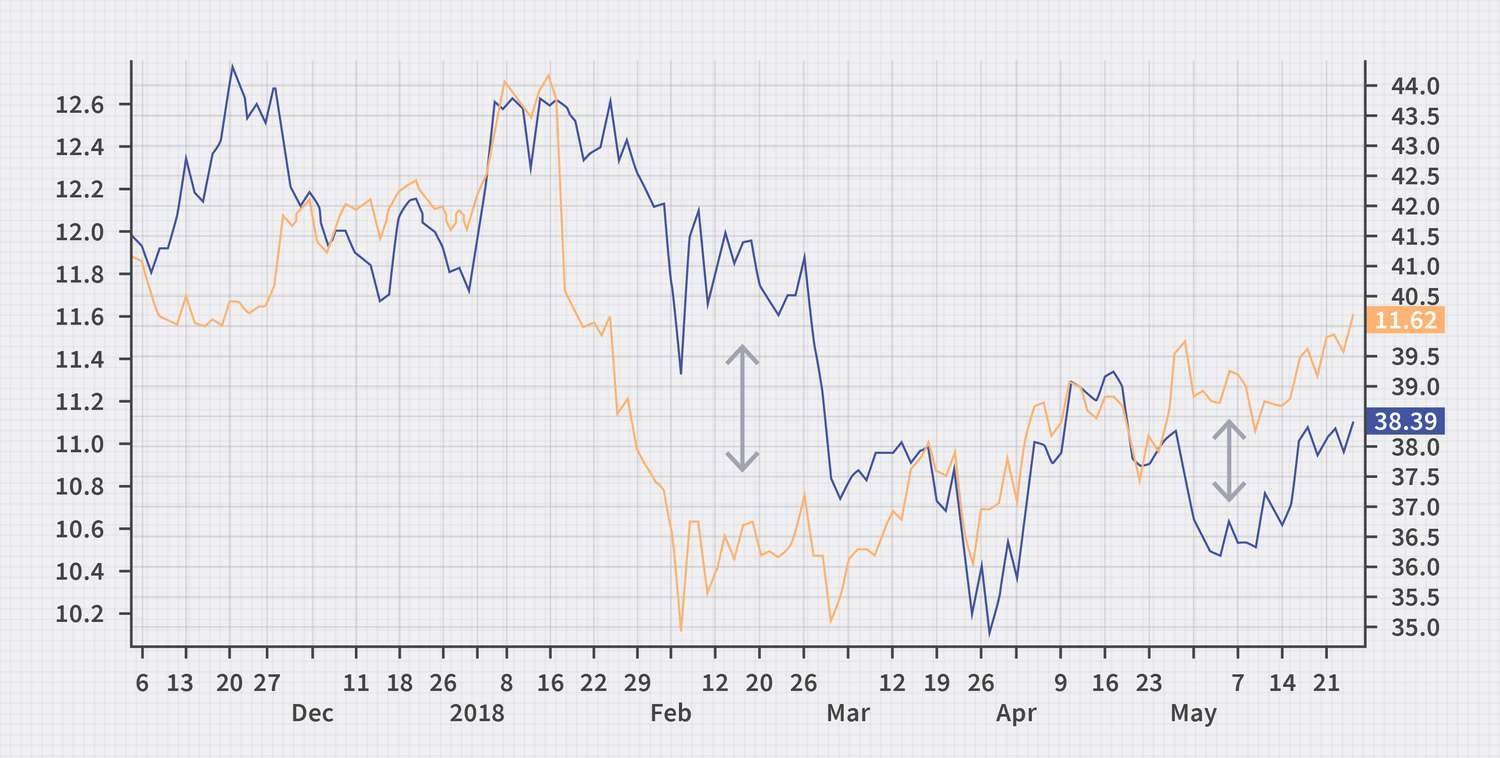
Foreign exchange statistical arbitrage strategies base their operations on identifying recurring market price connections instead of attempting to forecast market trends. The pair-based trading method serves as a popular strategy which tracks two currency pairs that show historical connection to detect their short-term price differences. The market enables traders to enter positions when market prices move beyond their usual ranges because they predict the prices will revert to their typical values.
A model would identify a short-term five-pip price difference which exists between two exchange-traded currency pairs that show market correlation. A long position is opened on the underperforming pair and a short position on the outperforming one. The calculation of lot size occurs to maintain equal pip values between both sides which results in neutral overall market exposure. Margin is allocated to both positions, and leverage is applied conservatively to ensure that small price movements do not amplify risk.
The basket strategy uses multiple currency pairs to reduce the impact of individual price fluctuations on total investment value. The total risk of the investment basket stays constant because position sizing methods get implemented. The strategies depend on exact implementation and minimal trading expenses and fixed risk parameters.
Data, models, and quantitative techniques
Statistical arbitrage in foreign exchange depends on high-quality data and disciplined quantitative methods. Price data is recorded in pips, while exposure is defined through standardized lot sizes, making it possible to convert price movements into measurable profit and loss. The construction of models requires historical price data to calculate average values and determine price range boundaries and statistical probability of price deviations.
The historical data indicates that a currency pair shows a ten-pip price movement during its normal short-term trading period. A model will identify a possible market return to its previous range when price shifts fifteen pips beyond this area. Before execution, the pip value is calculated based on the selected lot size. The expected five-pip market movement will directly affect the risk and return calculations because one pip represents ten units of account in a standard trading lot.
The calculation process combines margin and leverage into the final result instead of applying them as separate elements. Position size is reduced or increased so that margin usage stays within predefined limits, even when volatility changes.
Execution, infrastructure, and transaction costs
The execution quality stands as a vital element for statistical arbitrage because the expected price differences amount to only a few pips. The results will experience significant changes when any delay or price change occurs no matter how small it is. Trades are typically executed through electronic platforms that allow precise control over lot size, order type, and margin usage. Automated execution reduces human error and ensures consistency with predefined rules.
The strategy aims to achieve a three-pip statistical advantage through its use of one trading position. The total execution costs which include spreads and slippage amount to two pips so the net potential gain would be one pip. The decision to keep a trade depends on Pip value because it shows how well the trade will survive after all expenses are subtracted. The position sizing method ensures that transaction costs remain below the expected returns from investments.
The construction of infrastructure serves as a vital element which drives forward the development process. Stable data feeds, reliable order routing, and continuous system monitoring help prevent execution gaps during volatile periods. The use of leverage multiplies both positive results and negative performance mistakes which require businesses to use cautious methods when distributing their profit margins. Organizations can set proper expectations through complete cost analysis and scheduling performance checks which help them stay focused on following their disciplined approach.
Regulatory, ethical, and market structure considerations
Statistical arbitrage operates within a regulated and highly structured foreign exchange environment. The decentralized nature of currency markets exists but their trading activities follow rules which stem from regulatory systems and reporting requirements and central bank monitoring. The market environment determines how statistical trading methods operate because it affects both market liquidity and trading execution quality and access to financial leverage.
The amount of leverage which can be applied to a specific lot size depends on the margin requirements that brokers establish. The new margin rules require traders to dedicate more capital for pips-based positions which restricts their ability to perform multiple trading operations simultaneously. The Pip value stays constant but the total market exposure needs to be reevaluated because it exceeds the established regulatory boundaries. Capital allocation and risk planning need to run as an ongoing system because they need regular upkeep instead of being used as standalone solutions.
The evaluation process needs to assess its ethical components during the assessment stage. Statistical arbitrage relies on speed, automation, and data analysis, but it does not remove the obligation to trade transparently and within market rules.
Conclusion
The foreign exchange market uses statistical arbitrage as its main trading tool because it depends on structural analysis and measurement techniques and repeatable patterns instead of market predictions. The approach converts price movements into quantifiable outcomes using pips, lot sizing, margin, and leverage as mechanical inputs. When applied consistently, small statistical edges can be transformed into controlled trading decisions.
The process of calculating pip value followed by lot size adjustment helps traders to keep their market exposure constant when market prices change. The amount of capital dedication depends on margin requirements but traders use leverage to achieve better results without raising their exposure to market direction. Statistical arbitrage removes uncertainty through its implementation of probability-based rules which replace human-based decision making.