TradingView for forex analysis
Forex traders have more charting tools available today than at any point in the market's history. Most of them are forgettable. TradingView is not, and the trading community's response to it over the past decade reflects that. What started as a web-based charting application has grown into one of the most widely used analysis platforms across retail and institutional circles alike — not just for equities, but increasingly for currency markets.
The question worth asking is whether that popularity is earned when it comes specifically to Forex. Equities traders have been well-served by the platform for years. Forex is a different environment: decentralised, broker-dependent for pricing, and driven by macro forces that don't always show up cleanly on a chart.
Understanding that distinction requires looking beyond the platform's interface. TradingView's growth has been driven partly by genuine capability and partly by timing — it arrived as retail Forex participation was expanding rapidly and mobile-first workflows were becoming standard. Traders who had previously relied on desktop terminals found a browser-based alternative that required no installation and worked across devices without friction. That convenience shaped its adoption curve as much as any technical feature. But convenience and analytical depth are not the same thing, and conflating the two has led some traders to overestimate what the platform actually delivers for currency-specific analysis.
What TradingView is and how it fits into the forex ecosystem
TradingView operates as a browser-based charting and social platform. No installation required, no proprietary data terminal to license. A trader can open a chart of EUR/USD within seconds of creating a free account, which partly explains its rapid adoption among retail participants. But accessibility alone doesn't define its value.
Within the Forex ecosystem, the platform sits at a specific layer: it is primarily an analysis tool, not an execution environment. Most retail brokers do not route orders directly through TradingView, though broker integrations have expanded and some now support direct trading from the chart interface. For the majority of users, the workflow remains: analyse on TradingView, execute elsewhere.
That separation matters more in Forex than in equities. Currency prices are broker-dependent — there is no central exchange. TradingView aggregates price feeds from multiple sources, which generally produces reliable reference data for major pairs, but the price a trader sees on the platform may not match exactly what their broker is quoting. A small but real distinction.
Charting capabilities and technical analysis tools
The charting suite is where TradingView has built its reputation, and for good reason. The platform offers over 100 built-in technical indicators, more than a dozen chart types, and a drawing toolkit that covers everything from basic trend lines to Fibonacci retracements, Gann boxes, and multi-timeframe overlays. For a technical analyst working Forex, the toolset is genuinely comprehensive.
Execution of that toolset is smooth. Charts load quickly, update in real time, and handle timeframe switching without the lag that frustrates traders using older desktop terminals. Multi-chart layouts are available on paid plans, which matters when a trader needs to monitor EUR/USD on the four-hour alongside USD/JPY on the daily without toggling between windows.
Where the platform earns particular credit is in its template and workspace saving functionality. A trader who has spent time configuring indicators across multiple pairs can save that setup and return to it instantly. That kind of consistency tends to be undervalued until it isn't there. Compare this to some legacy platforms where reapplying an indicator setup after a session restart is a minor ritual in frustration.
Access to forex data: pairs, brokers, and price feeds
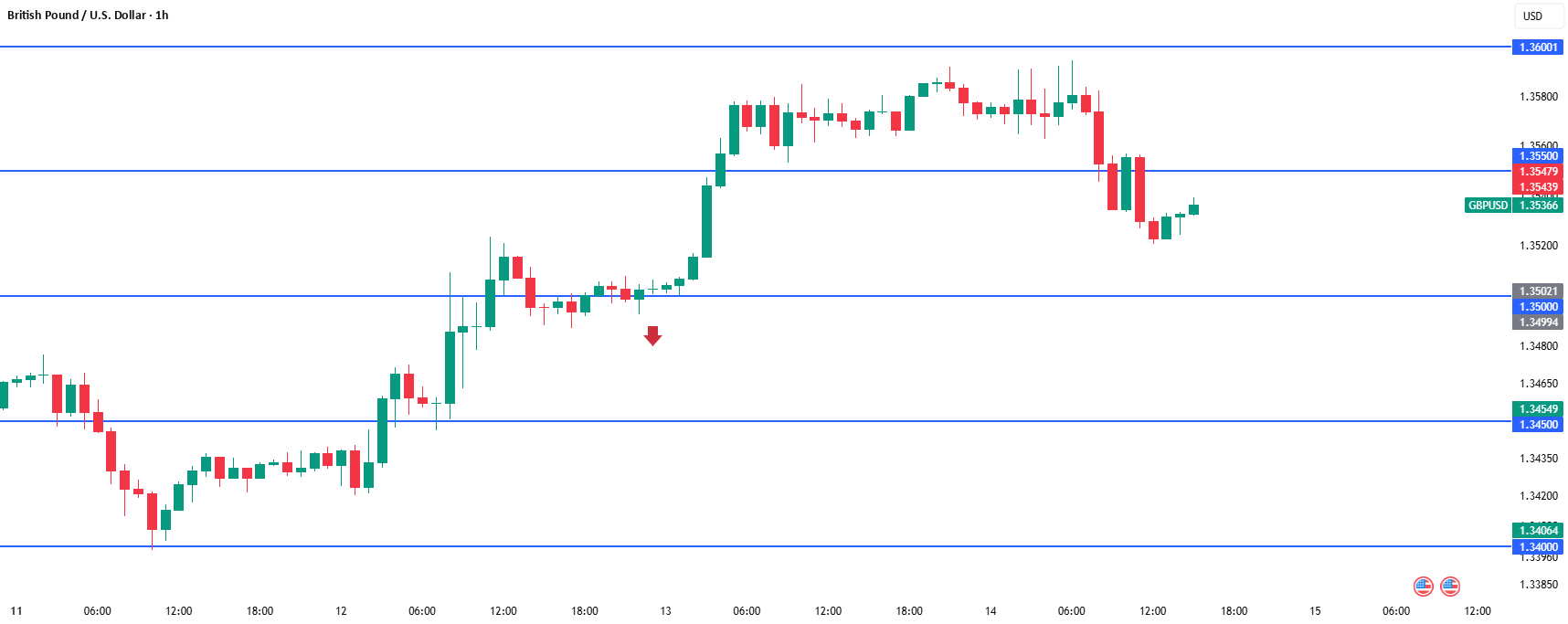
TradingView covers an extensive range of currency pairs — major, minor, and a broad selection of exotics. For most retail traders, coverage of the majors and key minors is what matters, and here the platform is more than adequate. EUR/USD, GBP/USD, USD/JPY, and AUD/USD all stream with tight, reliable price feeds drawn from aggregated broker and interbank sources.
The nuance lies in the data architecture. Because Forex lacks a centralised exchange, TradingView constructs its price feeds by aggregating quotes from connected brokers and liquidity providers. This generally produces a clean mid-price reference, but volume data — where visible — reflects only the platform's connected sources, not the actual global market. Traders who rely on volume-based analysis should understand that Forex volume on TradingView is a proxy, not a precise figure.
Exotic pairs are hit-and-miss. Coverage exists, but spreads and data quality vary. For traders working USD/ZAR or USD/TRY, verifying that the feed matches their broker's pricing before building any analysis around it is practical due diligence rather than caution.
The pine script advantage: custom indicators and strategy testing
Pine Script is TradingView's proprietary scripting language, and it represents one of the platform's most significant differentiators for serious Forex analysts. It allows traders to write custom indicators, build automated strategy logic, and backtest that logic against historical price data — all within the browser environment.
The learning curve is real but manageable. Pine Script's syntax is relatively accessible for traders with even modest exposure to coding concepts, and TradingView's documentation is thorough. A trader wanting to code a custom moving average crossover system with specific entry filters can typically build a working version within a few hours of starting.
For Forex application, the backtesting engine deserves a qualified endorsement. Strategy results are calculated against TradingView's aggregated price feed, which is reliable enough for directional testing on major pairs. It is not a substitute for walk-forward testing on live broker data, and the platform makes no claim that it is. But as a rapid-prototyping environment for testing indicator logic, it is considerably more accessible than building the same setup in MetaTrader's MQL4 or MQL5. Whether that accessibility translates to better trading outcomes depends entirely on what the trader does with the results.
Community, shared ideas, and the risk of noise
TradingView hosts one of the largest public trading communities online. Millions of published chart analyses, indicator scripts, and trade ideas are accessible directly within the platform, tagged by instrument and timeframe. For a developing Forex trader, that volume of published work can appear to be a resource.
It is a mixed one.
The platform does not curate for accuracy. Ideas marked "Editor's Pick" receive increased visibility, and some contributors have built substantial followings through consistent, reasoned analysis. But the majority of published content is unverified, sometimes contradictory, and occasionally misleading. A published EUR/USD analysis with several hundred likes carries no more inherent reliability than an anonymous post on any financial forum.
Used selectively, the community feature has genuine value. Searching for published Pine Script indicators built around a specific methodology — ICT concepts, for instance, or VWAP-based approaches — can surface well-constructed tools that would take hours to build independently. The risk is in treating the ideas feed as a signal source rather than a reference point. That distinction tends to separate traders who use the community productively from those who don't.
Limitations and where TradingView falls short for forex traders
No platform covers every requirement, and TradingView has meaningful limitations for Forex specifically. The most significant is execution dependency. Traders using brokers that lack TradingView integration — still a majority of retail Forex brokers globally — must operate a split workflow. Analysis on TradingView, execution on MetaTrader or a proprietary terminal. For disciplined traders this is manageable, but it introduces friction and, occasionally, mismatched pricing between environments.
Depth of market data is another gap. TradingView does not provide Level II pricing or DOM (Depth of Market) functionality for Forex in the way some dedicated terminals do. Traders who incorporate order flow analysis into their methodology will find the platform's data insufficient for that purpose.
Tick data quality on lower timeframes is also a known limitation. Strategies built around sub-minute entries, scalping logic, or very precise intraday levels can be difficult to validate accurately using TradingView's historical tick data. The platform is better suited to swing traders and those working on timeframes of fifteen minutes and above. That covers a large portion of retail Forex participants — but not all of them.
Verdict: who it suits and who should look elsewhere
TradingView earns its place in a Forex trader's toolkit for a well-defined profile: traders who work primarily on technical analysis, operate on timeframes of fifteen minutes or longer, and do not require integrated execution in the same environment as their charting. For that profile — which covers the majority of retail Forex participants — the platform delivers genuine value at a competitive price point. The free tier is functional enough for basic analysis. The paid plans add multi-chart layouts, additional indicators, and faster data refresh rates that make a practical difference for active traders.
Those who should weigh alternatives more carefully include order flow traders who rely on DOM data, scalpers dependent on high-precision tick history, and anyone whose broker doesn't support a TradingView integration and finds split-environment workflows disruptive. MetaTrader remains the dominant execution platform in retail Forex, and its charting tools — while less visually refined — are directly connected to live broker pricing.
What TradingView has managed to do is reduce the barrier to serious technical analysis considerably. That matters for traders earlier in their development. Whether the platform grows with a trader's needs over time is a function of how technically complex that trader's methodology becomes.